

Biotin vs Collagen: Which is Better for Hair Growth? It is a common question for people comparing hair supplements, particularly when they are dealing with thinning, breakage or concerns about overall hair health. Both biotin and collagen are widely discussed in the beauty and nutrition industry, but they are not the same type of nutrient and they do not have identical roles in the body.
Biotin is a B vitamin involved in several normal metabolic processes and has an authorised health claim in Great Britain for helping maintain normal hair. Collagen, meanwhile, is a structural protein found throughout the body and is particularly associated with connective tissues such as skin, cartilage and bone.
So, when comparing biotin vs collagen hair supplements, which one should you choose? The answer depends on what you want from a supplement, your overall nutritional intake and whether you actually have a nutritional deficiency.
Biotin vs Collagen Hair Supplements: What Is the Difference?
The biggest difference between biotin and collagen is what they actually are. Biotin, also known as vitamin B7, is a water-soluble B vitamin. It contributes to normal energy-yielding metabolism and, importantly for this topic, to the maintenance of normal hair.
Collagen is a protein made from amino acids. It provides structural support in various tissues and is naturally produced by the body. Collagen supplements generally provide hydrolysed collagen peptides, which are broken down into smaller components before being absorbed.
This means that comparing them as if they were two versions of exactly the same supplement is misleading. They have different nutritional roles and the evidence behind their use for hair also differs.
What Does Biotin Do for Hair?
Biotin is one of the nutrients most frequently associated with hair supplements. It contributes to the maintenance of normal hair under an authorised health claim used in Great Britain, provided the product meets the relevant conditions for making the claim.
Biotin is also involved in normal macronutrient metabolism, meaning it helps the body process nutrients from food. It is naturally found in foods such as eggs, nuts, seeds, meat, fish and some vegetables.
However, it is important to distinguish between maintaining normal hair and promising accelerated hair growth. Scientific research does not support the idea that taking large amounts of biotin will automatically make healthy hair grow faster.
A 2024 review of the evidence found that high-quality research supporting biotin supplementation specifically for hair growth is limited. This is an important distinction when evaluating claims made by hair supplement brands.
What Is Collagen and How Does It Relate to Hair?
Collagen is one of the major structural proteins in the human body. It is particularly important in connective tissues and forms part of the structural framework of skin and other tissues.
Because hair follicles are located within the skin, collagen has attracted interest in the beauty and hair supplement market. However, consuming collagen does not mean that collagen simply travels directly to the hair and becomes new hair.
After digestion, collagen is broken down into peptides and amino acids that the body can use in different ways. Research into oral collagen supplementation has explored areas such as skin and nail health, while evidence specifically relating to hair remains comparatively limited.
A review published in the Journal of Cosmetic Dermatology highlighted the relatively small number of studies examining oral collagen peptides for dermatological outcomes and noted variability between studies.
Biotin vs Collagen Hair: Which Has More Evidence?
When the search is specifically about biotin vs collagen hair, it is tempting to look for a simple winner. The scientific picture is more complicated.
Biotin has a recognised nutritional role and an authorised health claim relating to the maintenance of normal hair in Great Britain. However, evidence that additional biotin improves hair growth in otherwise healthy people is limited.
Collagen has also attracted considerable attention, but studies investigating oral collagen for hair are fewer and often involve combination formulas containing other nutrients. For example, one controlled study investigated a supplement containing hydrolysed marine collagen together with amino acids, iron and selenium alongside specific hair-loss treatments. The results were promising, but the formulation cannot be used to conclude that collagen alone was responsible for the observed effects.
Therefore, neither ingredient should be presented as a guaranteed solution for hair growth.
Is Biotin Better Than Collagen for Hair Growth?
If the question is whether biotin is better than collagen, there is no scientifically justified universal answer.
Biotin has a clearer established nutritional connection with normal hair maintenance and is particularly relevant when someone is not getting enough biotin from their diet. Nevertheless, deficiency is uncommon in many healthy populations, and supplementation is not automatically necessary for everyone.
Collagen may be more relevant to people interested in protein-based nutritional support and the broader health of connective tissues and skin. However, evidence specifically proving that collagen supplements increase hair growth is not strong enough to make a universal claim.
The better choice therefore depends on the individual rather than simply choosing the ingredient with the stronger marketing presence.
Can Biotin Make Hair Grow Faster?
This is one of the most common questions surrounding biotin supplements. The answer requires some caution.
Biotin contributes to the maintenance of normal hair, but that is not the same as proving that additional biotin makes hair grow faster in people who already have adequate levels.
A systematic review found limited evidence supporting biotin supplementation for hair and nail growth in healthy individuals. A more recent review similarly found a significant gap between the popularity of biotin hair supplements and the strength of the available clinical evidence.
This is why a responsible hair supplement article should avoid promising dramatic results. Nutritional support can be useful when it addresses a genuine nutritional need, but it cannot replace investigation of other causes of hair changes.
Can Collagen Help With Hair Growth?
Collagen is often marketed as a hair-growth ingredient, but the evidence needs to be interpreted carefully.
Some research has investigated oral supplements containing collagen alongside other ingredients in people experiencing hair loss. However, combination products make it difficult to determine how much of an observed effect came specifically from collagen.
There is also a difference between supporting healthy skin and connective tissue and directly increasing hair growth. At present, the evidence does not justify describing collagen as a guaranteed hair-growth solution.
For someone considering a collagen supplement, the overall formulation, dosage, source and purpose of the product are more meaningful considerations than simply choosing a product because it contains the word “collagen”.
What About Hair Breakage and Hair Thickness?
Hair growth and hair appearance are not exactly the same thing.
Someone may notice that their hair appears thinner because of increased shedding, breakage, changes in styling or differences in hair density. Improving nutritional status can be relevant when a deficiency is contributing to a problem, but supplements cannot address every cause of hair thinning or breakage.
Hair is also affected by external factors such as frequent heat styling, chemical treatments, tight hairstyles and mechanical damage. A sensible hair-health routine therefore needs to consider both internal nutrition and external hair care.
This distinction is particularly useful when researching biotin vs collagen hair supplements because consumers may actually be looking for different outcomes without realising it.
What Nutrients Should You Look for in a Hair Supplement?
Biotin is only one nutrient that can contribute to normal hair health. A broader nutritional approach may include vitamins and minerals that contribute to normal physiological functions relevant to skin, hair and general wellbeing.
Zinc, for example, contributes to the maintenance of normal hair, skin and nails. Selenium contributes to the maintenance of normal hair and nails, while vitamin C contributes to normal collagen formation.
This does not mean that taking every available vitamin will improve hair growth. Instead, the quality of a supplement should be assessed based on its ingredients, appropriate amounts, nutritional purpose and how it fits into an individual’s overall diet.
The Great Britain Nutrition and Health Claims Register is particularly relevant when evaluating commercial health claims made about food supplements in the UK.
How Lilia Derma Care Fits Into the Biotin vs Collagen Comparison
For consumers comparing biotin vs collagen hair supplements, a multi-nutrient formula can be an alternative to focusing on one fashionable ingredient.
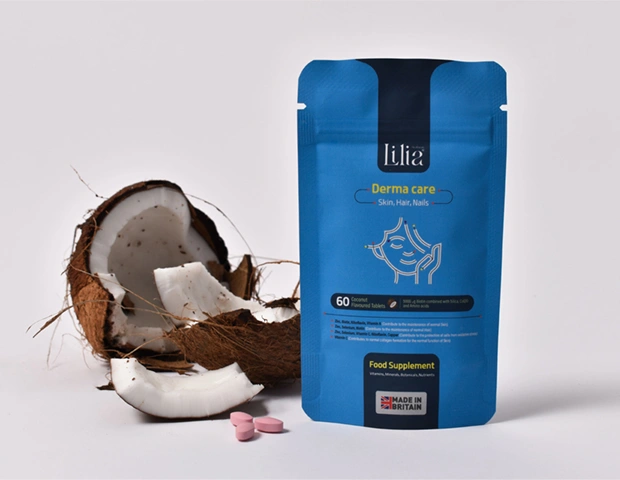
Lilia Derma Care contains 5,000 mcg of biotin alongside silica, PABA, CoQ10, L-cysteine and L-arginine. The product is formulated around nutritional support for normal hair, skin and nail health and is supplied as 60 tablets, described by Lilia as a two-month supply.
The important point is that Lilia Derma Care does not position collagen as the sole answer to hair concerns. Instead, it provides a combination of nutrients within one daily supplement.
For people considering beauty supplements, this type of formulation may be preferable to buying several individual products, although consumers should always check the full nutritional information and consider any other supplements they are already taking.
Who Might Consider a Biotin-Based Hair Supplement?
A biotin-containing supplement may appeal to adults who want to support normal hair, skin and nail health as part of a balanced lifestyle.
It may be particularly relevant for people who have dietary restrictions or lifestyle factors that make maintaining a varied diet more difficult. However, supplementation should not be viewed as a substitute for a nutritious diet.
People experiencing sudden, severe or persistent hair loss should also avoid assuming that a biotin deficiency is responsible. Hair changes can have many possible causes, and professional assessment may be appropriate when symptoms are unexplained.
Biotin vs Collagen: Which Should You Choose?
The best answer to biotin vs collagen hair is not simply “biotin” or “collagen”.
Biotin has a clearer established role in maintaining normal hair and an authorised health claim in Great Britain, while the evidence for collagen specifically supporting hair growth remains less established.
At the same time, having more evidence for a nutrient’s normal physiological role does not mean that taking additional amounts will necessarily produce faster or thicker hair.
If your priority is a supplement containing high-strength biotin alongside other nutrients traditionally included in hair, skin and nail formulations, Lilia Derma Care is one option to consider. If you are looking at collagen, assess the product based on its complete formulation and evidence rather than assuming that collagen automatically produces hair-growth benefits.
Other Factors That Matter for Healthy Hair
Supplements are only one part of maintaining healthy-looking hair. Adequate protein, a varied diet, sufficient sleep and general wellbeing all contribute to overall health.
Hair can also be affected by stress, hormonal changes, illness, rapid weight changes and certain medications. If hair shedding is sudden or continues for a prolonged period, identifying the underlying reason is more useful than repeatedly changing supplements.
Good hair care also matters. Limiting excessive heat, avoiding unnecessarily tight hairstyles and handling wet hair gently can help reduce avoidable mechanical damage.
A supplement can therefore be considered as one component of a broader approach rather than a replacement for good nutrition and appropriate professional advice.
Final Verdict: Biotin vs Collagen for Hair
When comparing biotin vs collagen hair supplements, the evidence does not support a simple winner for everyone.
Biotin has a well-established nutritional role and an authorised Great Britain health claim relating to the maintenance of normal hair. However, high-quality evidence that extra biotin promotes faster hair growth in healthy individuals remains limited. Collagen is an important structural protein and is widely used in beauty supplements, but research specifically connecting oral collagen with increased hair growth is also still developing.
The most sensible approach is to look beyond one ingredient. Consider your diet, nutritional needs, the full supplement formulation and the possible causes of any hair changes you are experiencing.
For those looking for a biotin-focused formula combining several ingredients for hair, skin and nail nutritional support, explore Lilia Healthcare UK and discover Lilia Derma Care as part of a balanced approach to everyday beauty and wellness.